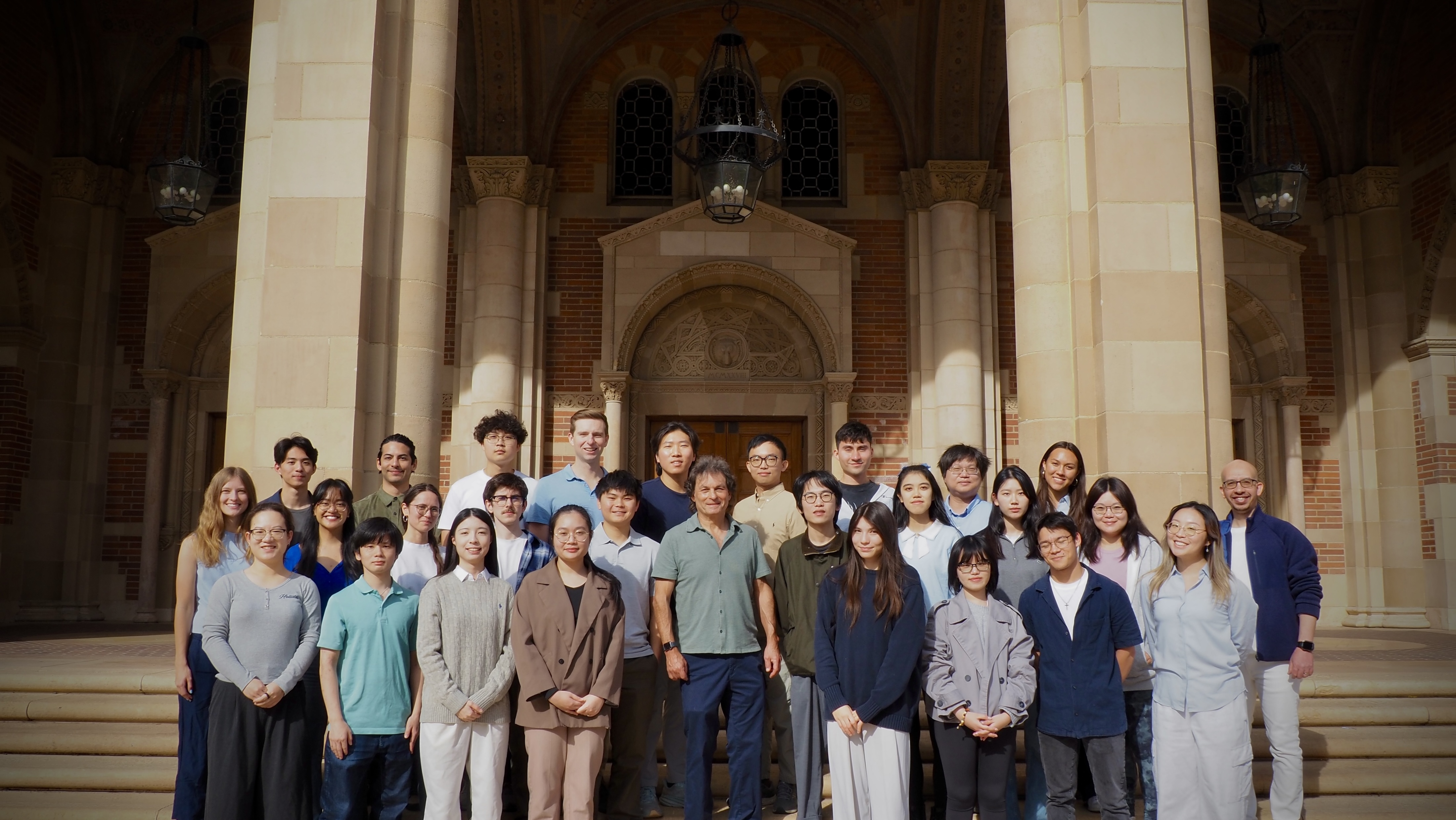
The Kaner Research Group at UCLA focuses on the design, synthesis, and understanding of advanced materials for energy, electronics, and sustainability. Our work spans chemistry, materials science, and engineering, with an emphasis on creating materials that combine fundamental insight with real-world impact. By integrating synthetic chemistry, electrochemistry, and materials characterization, we aim to uncover structure–property relationships that enable next-generation technologies, from energy storage and water purification to superhard materials and conducting polymers.
Energy Storage
A major focus of the Kaner Group is the development of advanced materials for electrochemical energy storage, particularly electrochemical capacitors (supercapacitors). Supercapacitors offer rapid charge–discharge rates and exceptional cycle life, making them critical for applications such as regenerative braking, backup power systems, and portable electronics. Our research addresses the key challenge limiting their broader adoption—low energy density—by developing novel electrode materials with high surface area, fast charge transport, and enhanced electrochemical performance. We are also actively exploring flexible, miniaturized, and architected energy storage devices designed for emerging electronics and transportation technologies.
Superhard Materials
The Kaner Group pioneered a materials design strategy for superhard solids based on combining high valence electron density with strong covalent bonding. This concept led to the discovery and understanding of transition metal borides such as rhenium diboride and tungsten tetraboride as superhard and incompressible materials. Current efforts focus on expanding this design framework by tuning composition, bonding motifs, and crystal structure through solid solutions and doping. By systematically studying boron–boron and boron–metal bonding across related compounds, we aim to develop predictive guidelines for designing materials with exceptional mechanical properties.
Conducting Polymers
Our group has played a leading role in advancing the chemistry and applications of conducting polymers, particularly polyaniline nanostructures. We developed simple and scalable synthetic routes to polyaniline nanofibers that exhibit high surface area and enhanced sensitivity for sensing applications. Beyond synthesis, we study how light, heat, and chemical stimuli can be used to induce bonding, welding, and composite formation within polymer networks. This work enables tunable electrical, mechanical, and thermal properties for applications ranging from sensors to energy devices.
Water Purification Membranes
In collaboration with Prof. Eric Hoek’s group in Civil and Environmental Engineering, the Kaner Group develops advanced membranes for water purification and separation technologies. Our work has explored polyaniline-based ultrafiltration membranes formed through phase inversion processes, as well as strategies to improve membrane performance and antifouling behavior. By tailoring polymer chemistry, surface functionality, and membrane morphology, we aim to create robust, high-performance membranes for sustainable water treatment.